
If you spend any time with me at all, I will talk about my children. I will tell you about Josh’s latest cooking adventures, about Sammy’s internship and about Miriam’s plans to move to California.
And I will correct your pronouns.
My oldest is non-binary – neither male nor female – despite appearances, name and everything you think you know about them.
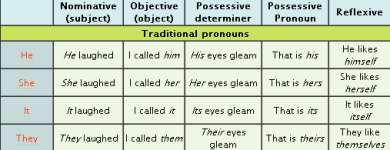
We have learned to refer to them with the pronouns they, them and their, which, I will admit, makes for some awkward sentences, but the underlying issue is one of identity. As a parent and ally, I can learn to live with (and eventually even let go of) this discomfort. For my child, being mis-gendered (or mistaken for the wrong gender) is a daily occurrence, and it hurts.
We don’t get to question others’ identities. We don’t get to say, “No, you’re wrong. You are not that. You are this.”
You might find this exasperating. You might say, “What do you expect? If you look like a man, people will assume you are a man; if you look like a woman, people will assume you are a woman.”
You might try compassion. You might say, “But I love your child. Gender is meaningless to me.”
And I’ll remind you that none of us is gender-blind, race-blind, able-body-blind. Human beings are pattern makers, and when we spend our lives labeling people based on whether they have prominent breasts or a deep voice, based on mannerisms or the way they dress, it’s hard to see beyond those conventional gender markers.
You might plead incompetence and tell me, “I’ll do anything to support you and your family, but pronouns are hard. I don’t know if I can manage that.”
I’ll remind you, gently and lovingly, that your difficulty with pronouns is understandable, but you’ll get over it. I’ll point out that you’ll have to practice if you want to maintain a relationship with my child. I’ll even confess that one of the first things I said when my child told me they were non-binary was, “I love you. I’ll do anything. I don’t know if I can manage the pronouns.”
That was not my proudest moment.
I am hopeful that this is a generational problem, and that our children and their children won’t experience such cognitive dissonance. What if no one had to “come out?” What if we didn’t consider some genders acceptable and others problematic? What if people could be attracted to and create families with anyone they wanted to, regardless of gender or sexuality?
What if we cared so much about the people we love and the people we don’t yet know that we were more concerned about their comfort and safety than about our discomfort with pronouns.
I probably care about this more than you do. I live with this issue every day. As a parent, I am trying make the world a better place for my children. I want them to be their full selves, completely and comfortably.
What do I want you to do? I want you to practice. You can practice with me or with someone else. Talk about my kid or the non-binary person at work or in your classroom. Talk about your friend’s child – the one who was so cute in elementary school, but who you don’t understand anymore.
Here are some silly sample sentences to start you off:
- Is Scooby Doo coming downstairs for dinner? Tell them we’re eating in 10 minutes.
- What is Sponge Bob studying these days? I hear they’ve started reading the Iliad in the original Greek.
- Minnie Mouse stopped by for tea yesterday. Their friends showed up too, and we talked politics all afternoon.
You might be wondering, “How does this work? Do I say they is on their way or they are on their way?” You match the pronoun to the verb, like this: Bugs Bunny just texted me. They are on their way.
We don’t talk about one another in the third person when we’re together. When you and I meet for breakfast, I call you “you.” I might even say your name, but I certainly won’t call you by your pronouns. However, when the waitress comes to the table and asks if we want to take a cup of coffee for the road, and I say, “I’m fine, but she might take hers to go,” when your pronouns are they/them/their, you will feel hurt by my insensitivity.
If my 70-something parents can do this, you can too. As I tell my friends and extended family, it takes practice. I will gently and lovingly correct you every time. I will not expect you to get it right on the first, second or fifteenth try. I know that sometimes you’ll get it right and other times you’ll slip into old patterns. I do too, but less frequently as time goes on. I just want you to give it a shot – when I’m with you and when I’m not; when my child is in the room and when they’re across the country.
And this too. If you get it wrong, don’t apologize a hundred times. Just repeat the sentence with the correct pronoun. Practice. For my sake, and for the sake of all of our children.
Eventually, we’ll all get it right.
 Writing It Down
Hi there, my child identifies as non binary too, and I’m just getting used to it. Thank you for being open and talking about your knowledge and experiences. I need to crawl through your blog a bit more but it popped up when I did a google search.
LikeLike
I’m glad you found the blog helpful. The more I talk about it the more people I find who are having similar experiences. It makes it a bit less strange and lonely – like many things about parenting!
LikeLike
There has to be a better way. Using they is too confusing. You are not communicating. My solution: don’t use pronouns at all. To the waitress: I’ll take a coffee, but my partner won’t. Is Scooby upstairs? Tell Scooby dinner is in 10 minutes. Yeah it is awkward, but not more awkward than “they” and is miraculously clear.
Maybe English will develop a gender neutral pronoun. Until then, find a way to make a gender neutral person comfortable AND communicate without confusion to that person and all others. I spent my career in corporate communications and when this came up successfully eliminated hurtful pronouns and wrote text that communicated. No, a crowd is not coming downstairs for dinner.
LikeLike
I see your point, but I respectfully disagree. I too am in the communication field (marketing, PR, speech writing, training for nearly 30 years) and recently wrote a book with my business partner, and we discussed this issue at length. So you can see that I grapple with pronouns personally and professionally. In a marketing piece, I can edit for clarity and gender-neutrality, because I have time to think and revise. In daily conversation, I need a pronoun. I am assuming this is not an issue you face in your daily life, so I will ask you to defer to those of us who need ways to talk about our children, friends and loved ones every day as naturally as possible. Using “they” as a singular pronoun facilitates those casual conversations. It is an imperfect solution, and I suspect that one day English will evolve to the point where we have the right pronoun. For now, we do the best we can. One other point of correction: non-binary people are not “gender neutral.” They have a gender, but that gender does not conform to the male/female binary.
LikeLike
Thank you. This post and your other posts about this have made this new way of thinking 100% easier for me. I love both of my children more than I could ever express in words, but it’s been hard for me to understand fully and also get used to calling my first-born by the name of Alex instead of Alessandra or Ali. Sure, it’s understandable since I’ve been calling them that for 16 years, but it’s not an excuse to continue on with it. I have gotten used to Alex (although I slip up often and correct myself), but using they/them pronouns has been much more of a struggle. Honestly, I never quite understood “non-binary” until I read your posts. Alex tried so hard but just couldn’t quite put into words what they wanted to say. Knowing this has made it so much easier to use the correct pronouns. Now I can start to explain to others because I finally understand what it truly means. Thank you! I’m in tears right now. I feel so relieved that I finally get it!!! I guess I just needed another mom who knows how to explain it to someone who is utterly clueless and is going through the same situation as I am.
LikeLike
I’m so glad I could help you. It means so much to me that you let me know.
LikeLiked by 1 person